
Why Spreadsheets Fail for Sneaker Resale Inventory
Every sneaker resale store starts with a spreadsheet. Google Sheets or Excel, a few columns — SKU, size, price, status. It works when you have 30 pairs.
It stops working around pair 200.
The breaking points
1. Manual sync across platforms
You list a pair on Shopify, StockX, and eBay. It sells on StockX. Now you need to manually remove it from Shopify and eBay.
If you forget — or if it takes you 10 minutes — someone else buys the same pair on Shopify. You've oversold. You cancel the order, take a hit on your seller rating, and lose the customer's trust.
Spreadsheets cannot sync with sales platforms. They are static. Sales platforms are real-time.
2. No automatic fee tracking
StockX charges different fees than eBay. eBay fees change based on your seller tier. Shopify has transaction fees plus payment processing fees.
In a spreadsheet, you either ignore fees (and your margin numbers are wrong) or you build complex formulas that break every time a platform updates their fee structure.
3. Multi-person chaos
When two people update the same spreadsheet, conflicts happen. Someone overwrites a cell. Someone sorts a column without selecting all columns. Someone accidentally deletes a row.
There is no undo history that catches everything. There is no audit trail of who changed what.
4. No alerts
A pair has been sitting for 90 days without selling. In a spreadsheet, you only know this if you manually check. Nobody checks.
Dead stock quietly ties up capital. By the time you notice, the pair has depreciated and your margin is gone.
What the numbers look like
A typical sneaker resale store with 300 pairs across 3 channels:
- 900 listings to maintain (300 pairs × 3 platforms)
- 10-20 hours/week on manual inventory updates
- 2-5 oversells/month from delayed updates
- $500-2,000/month lost to oversells and missed repricing opportunities
What works instead
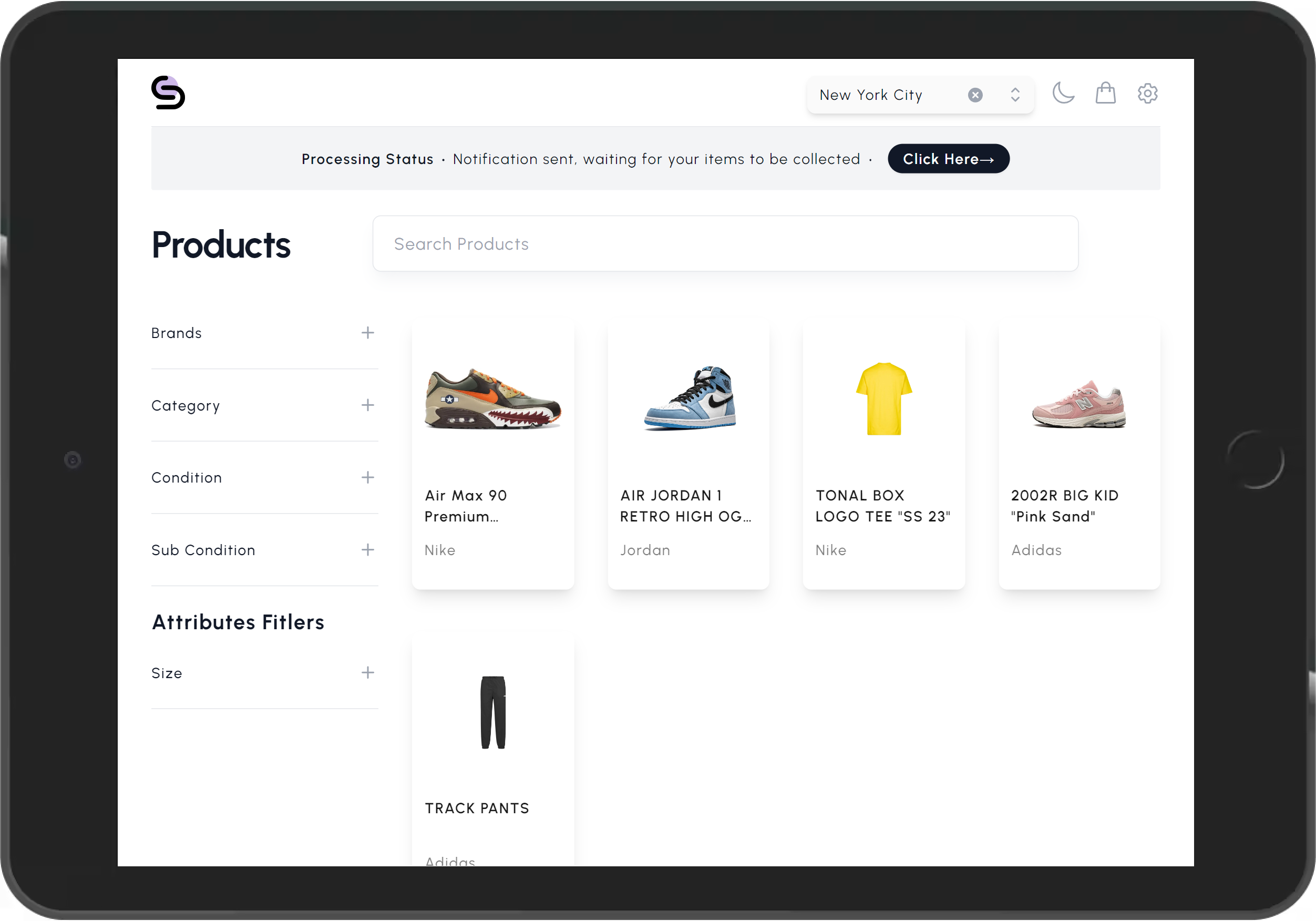
Purpose-built inventory software like StackKnack solves these specific problems:
- Automatic sync: When a pair sells on one platform, all others update within 30 seconds
- Fee tracking: Platform fees are calculated automatically per sale
- Oversell prevention: Committed inventory is tracked across all channels in real time
- Dead stock alerts: Configurable thresholds flag items that haven't sold
The switch from spreadsheets to dedicated software typically takes under an hour. See the detailed comparison for a feature-by-feature breakdown.
When to make the switch
If any of these are true, you've outgrown spreadsheets:
- You sell on 2 or more platforms
- You have more than 50 active SKUs
- You've had an oversell in the last month
- You spend more than 5 hours/week on inventory updates
- You don't know your actual margins after fees
The longer you wait, the more oversells and missed opportunities accumulate.